
Political
Donald Trump Has COMPLETELY LOST IT as He Brutally HUMILIATES an MS NOW Reporter During an Explosive White House Press Briefing, Calling the Network “FAKE” and Refusing to Answer His Question! But One Unexpected Moment During the Heated Exchange Has Americans Erupting, and His Final Five Words Have Left MS NOW and Democrats FURIOUS, with Calls for Trump’s Immediate Removal!

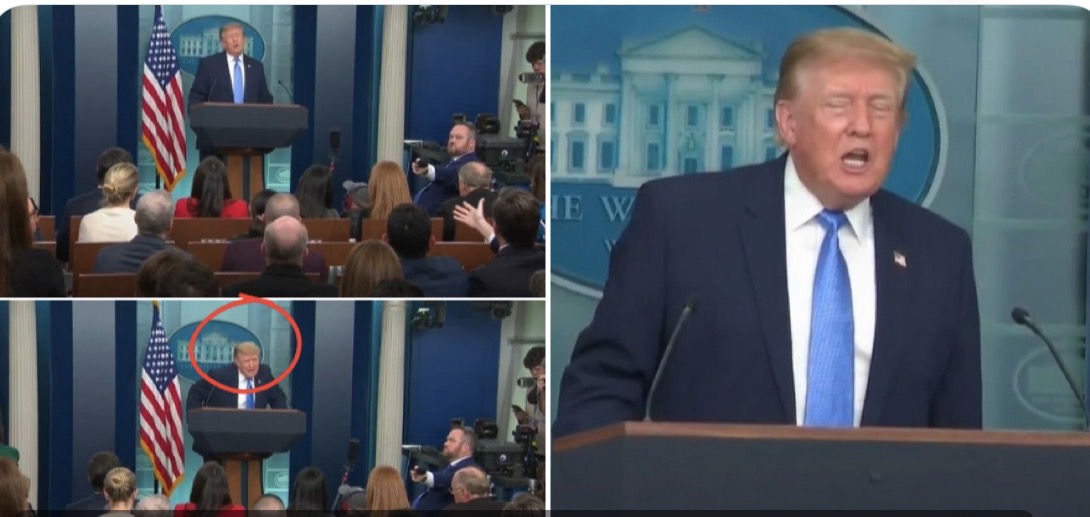
The confrontation between President Donald Trump and an MS NOW reporter at the White House has sparked another heated political debate, drawing attention to the relationship between the president and the American media. What began as a question about Russia’s ongoing war against Ukraine quickly turned into a tense exchange, with Trump dismissing the reporter’s network as fake and refusing to engage directly with the question.
The incident took place on November 9, 2026, during an impromptu White House press conference. Although the president was expected to address several political and international issues, the atmosphere changed dramatically when an MS NOW correspondent attempted to question him about Russian President Vladimir Putin and his repeated refusal to meet American demands concerning a ceasefire.
The reporter’s question appeared straightforward but carried serious political implications. The journalist reminded Trump that he had repeatedly given Putin deadlines to agree to a ceasefire and meet directly with Ukrainian President Volodymyr Zelenskyy. However, according to the available transcript, Trump interrupted before the reporter could finish.
Rather than directly addressing the concerns, Trump challenged the journalist, asking which news organization he represented.
When the reporter identified MS NOW, the president immediately turned his attention towards the network.
TRUMP DISMISSES MS NOW AS A FAKE NETWORK
Trump’s response quickly became the most talked-about moment of the exchange.
After hearing the reporter identify his network, Trump dismissed MS NOW, describing it as fake and criticizing its television ratings.
He also referred to the broadcaster by its former name, MSNBC, using the nickname “MSDNC” while continuing his criticism.
The president then declared that the network was a joke before directing the reporter to move aside so another journalist could ask a question.
The exchange was particularly noticeable because the reporter had been attempting to raise an important question about America’s approach to the Russia-Ukraine conflict.
Instead of receiving a detailed response about Putin’s refusal to follow through on ceasefire demands, the journalist found himself at the center of a confrontation about media credibility.
For viewers watching the exchange, the incident raised an important question: Should a president’s personal disagreements with a news organization influence how journalists are treated when asking questions at the White House?
That question has become increasingly relevant as Trump’s relationship with several major American media organizations continues to attract attention.
THE QUESTION TRUMP DID NOT DIRECTLY ANSWER
Perhaps the most significant part of the confrontation was not the president’s criticism of MS NOW but the original question that started the disagreement.
The reporter wanted to know why Putin had repeatedly ignored Trump’s demands for progress towards ending the war in Ukraine.
The United States has played an important diplomatic role in efforts to bring Russia and Ukraine closer to negotiations. However, achieving a lasting agreement has proved extremely difficult.
Putin’s position, Ukraine’s security concerns and disagreements over territorial issues have continued to complicate diplomatic efforts.
The journalist was essentially asking whether Trump’s strategy was producing meaningful results or whether the Russian president was simply ignoring American pressure.
It was a question that demanded a substantive foreign policy explanation.
Trump briefly challenged the reporter’s characterization of Putin’s actions, asking whether Russia had been fighting the United States in the war. But after learning that the journalist represented MS NOW, the exchange shifted towards criticism of the broadcaster.
The president subsequently moved on to another reporter without providing a direct, detailed answer to the original question.
For critics, that was the most important aspect of the incident.
They argue that questions about international security, American diplomacy and the president’s foreign policy decisions deserve clear answers, regardless of which news organization asks them.
A LONG HISTORY OF TENSION BETWEEN TRUMP AND THE MEDIA
The latest confrontation did not happen in isolation.
Throughout his political career, Trump has maintained a highly confrontational relationship with journalists and media organizations that publish critical coverage of his administration.
He frequently uses the expression “fake news” when criticizing reporting he believes is unfair or inaccurate.
Supporters argue that the president has every right to challenge journalists and defend himself against reporting he considers misleading.
They also believe that some media organizations have demonstrated political bias and that politicians should not be expected to accept every question without responding.
However, critics see a different problem.
They argue that repeatedly attacking journalists, questioning their credibility and dismissing their organizations can create an environment in which difficult questions become increasingly difficult to ask.
The September 2026 dispute involving MS NOW, CNN and Politico added another dimension to those concerns.
Trump had announced restrictions against the three organizations, accusing them of publishing false reporting about his administration. Journalists from MS NOW were subsequently among those affected by restrictions on White House access.m
The latest confrontation therefore comes against an already complicated background.
WHY THE WHITE HOUSE EXCHANGE IS ATTRACTING ATTENTION
Presidential press conferences are more than opportunities for politicians to communicate their positions.
They also provide journalists with an opportunity to challenge statements, investigate government decisions and demand explanations about matters affecting the American public.
That is why even a relatively brief exchange between a president and a reporter can generate significant political discussion.
The MS NOW confrontation touched on several sensitive subjects simultaneously: freedom of the press, presidential accountability, political polarization and the administration’s approach towards Russia.
It also demonstrated how quickly a discussion about international diplomacy can become a disagreement about the media itself.
For some Americans, Trump’s refusal to continue engaging with the reporter demonstrated his unwillingness to entertain questions from organizations he considers hostile.
For others, the president was simply expressing his frustration with a broadcaster he believes has treated him unfairly.
The difference between those interpretations reflects the deep political divisions that continue to shape American public life.
DEMOCRATS AND PRESS FREEDOM ADVOCATES RAISE CONCERNS
The incident is also likely to intensify existing concerns among Democrats and press freedom advocates about the treatment of journalists covering the administration.
Critics argue that the president occupies an extraordinarily influential position and that his interactions with the media establish expectations for how government officials should treat independent journalists.
They believe that reporters should be allowed to ask difficult questions without having their professional credibility dismissed simply because their employer is unpopular with the president.
There are also broader constitutional questions surrounding the relationship between government power and freedom of expression.
The First Amendment protects freedom of speech and the press, although disputes involving access to government-controlled spaces can raise additional legal questions.
However, it is important to distinguish between criticism of a president’s conduct and calls for his removal from office. The available transcript does not establish that the confrontation itself triggered any formal removal proceedings or a coordinated Democratic campaign to remove Trump.
Nevertheless, the incident has provided fresh material for critics who already question the administration’s relationship with the press.
TRUMP’S SUPPORTERS SEE THINGS DIFFERENTLY
Not everyone watching the confrontation interpreted it negatively.
Trump’s supporters have frequently defended his aggressive approach towards journalists, arguing that he is willing to challenge news organizations that they believe have been unfair to him.
Some view his criticism as an example of a president refusing to allow journalists to control the narrative surrounding his administration.
They also argue that reporters should be prepared to defend their questions and that media organizations should be held accountable for inaccurate reporting.
From this perspective, Trump’s comments were another example of his familiar communication style rather than an extraordinary political development.
However, even among people who support the president, the original question about Putin remains important.
The future of the Russia-Ukraine conflict has significant consequences for international security, American foreign policy and the stability of Europe.
Whether Trump’s diplomatic strategy can produce meaningful progress is a question that deserves continued attention.
THE BIGGER QUESTION FACING AMERICA
Ultimately, the confrontation between Trump and the MS NOW reporter represents something bigger than one uncomfortable moment in a White House press conference.
It highlights the continuing struggle over how journalists should interact with political leaders and how much accountability the American public should expect from its elected officials.
Presidents have the right to criticize the media, challenge inaccurate reporting and express disagreements with journalists.
But journalists also have an important responsibility to question those in power, particularly when their decisions involve international conflicts, national security and the future of American foreign policy.
The November 9 exchange has once again placed that relationship under the spotlight.
And while Trump’s description of MS NOW as a fake network dominated much of the discussion, the original question about Vladimir Putin remains unanswered in the exchange.
For Americans following the situation, the bigger issue is whether the administration can provide clear explanations about its diplomatic decisions while maintaining an open relationship with the journalists responsible for reporting them.
One thing is certain: the relationship between Donald Trump and the American press remains deeply contentious, and confrontations like this are unlikely to end the debate anytime soon.
Editorial note: This article is based on the November 9 press conference transcript. Claims about a dramatic final five-word statement or formal calls for Trump’s immediate removal have not been independently established.

Royal Family in TURMOIL as Prince William and Princess Catherine Return From Mumbai, India, With a SHOCK Announcement That Could Change the Monarchy Forever, Leaving King Charles FURIOUS Over Their Unexpected Decision

🚨🔥ROYAL-POLITICAL SHOWDOWN! Prince Harry STUNS THE WORLD by Declaring He Would Return to Military Service If Needed While SLAMMING Donald Trump’s Approach to the Ukraine War! But Trump’s RESPONSE Was Something Absolutely Nobody Expected! Harry reportedly fired back with a powerful statement suggesting the Royal Family would stand behind him, sending shockwaves through the political world. But just when everyone thought the confrontation couldn’t get any bigger, Trump made a shocking statement that a president should never have made — a remark so explosive that it could spark calls for his resignation….

*”Mum, Wake Up”: Viral Playground Photo Shows Meghan Lying Still As Harry Holds Her And The Children Cry — Royal family just gave a statement on

🚨 ROYAL PUBLICITY BACKLASH! Harry and Meghan’s Winter Wonderland Family Photos SPARK SUSPICIONS as William and Kate Receive Worldwide Attention Following Their Successful India Tour — Critics Question Whether the Sussexes Are Trying to Steal the Spotlight and Rebuild Their Tarnished Public Image Through Archie and Lilibet. But One Detail Has Everyone Talking… 👀
🚨 PRINCE HARRY AND MEGHAN MARKLE FACE HYPOCRISY BACKLASH After Taking Archie and Lilibet to London’s Winter Wonderland Despite Years of Speaking About Their Children’s Privacy! But One Detail in the Photos Has Left Royal Fans Suspended and Asking Questions. 😳👇

Prince William and Princess Catherine Rushed for Emergency Medical Attention After Terrifying Mumbai Rickshaw Accident! King Charles Reportedly Receives Devastating News as Palace Officials Face Growing Questions About the Couple’s Condition. But What Happened to Catherine Moments After the Rickshaw Plunged Into the Water Has Left Royal Watchers Deeply Worried…

BREAKING: Prince William and Princess Catherine Rushed for Emergency Medical Attention After Terrifying Mumbai Rickshaw Accident! King Charles Reportedly Receives Devastating News as Palace Officials Face Growing Questions About the Couple’s Condition. But What Happened to Catherine Moments After the Rickshaw Plunged Into the Water Has Left Royal Watchers Deeply Worried

How Meghan Markle’s ex-husband Trevor Engelson got his ‘revenge’: Inside their rocky marriage and ugly divorce….. (For Full Information, Check Link In Comment👇🏻👇🏻)

Tom Brady, 49, Sparks Romance Rumours After Being Spotted Getting Close to a Mysterious 28-Year-Old Woman at Miami’s South Beach! But One Unexpected Detail About the Woman Has Left Everyone Talking.

Patrick Mahomes and Pregnant Brittany Mahomes Spotted Enjoying a Romantic Vacation Together Ahead of the Chiefs vs. Cardinals Game

Prince William and Kate Middleton Return from Royal Tour in Mumbai, Their Romantic and Playful Moments Steal the Spotlight During an Intimate Beach Vacation in the UK, but Kate’s Unexpected New Appearance Leaves Fans Stunned and Raises Big Questions
