
ROYAL FAMILY
🚨 “I’D RATHER LOSE MY ROYAL TITLE THAN SIGN THIS DOCUMENT!” — PRINCESS KATE SPARKS SHOCKWAVES OVER AN AGREEMENT INVOLVING PRINCE GEORGE! William tries to persuade his wife, but when Kate discovers the final clause, she immediately demands… 👇

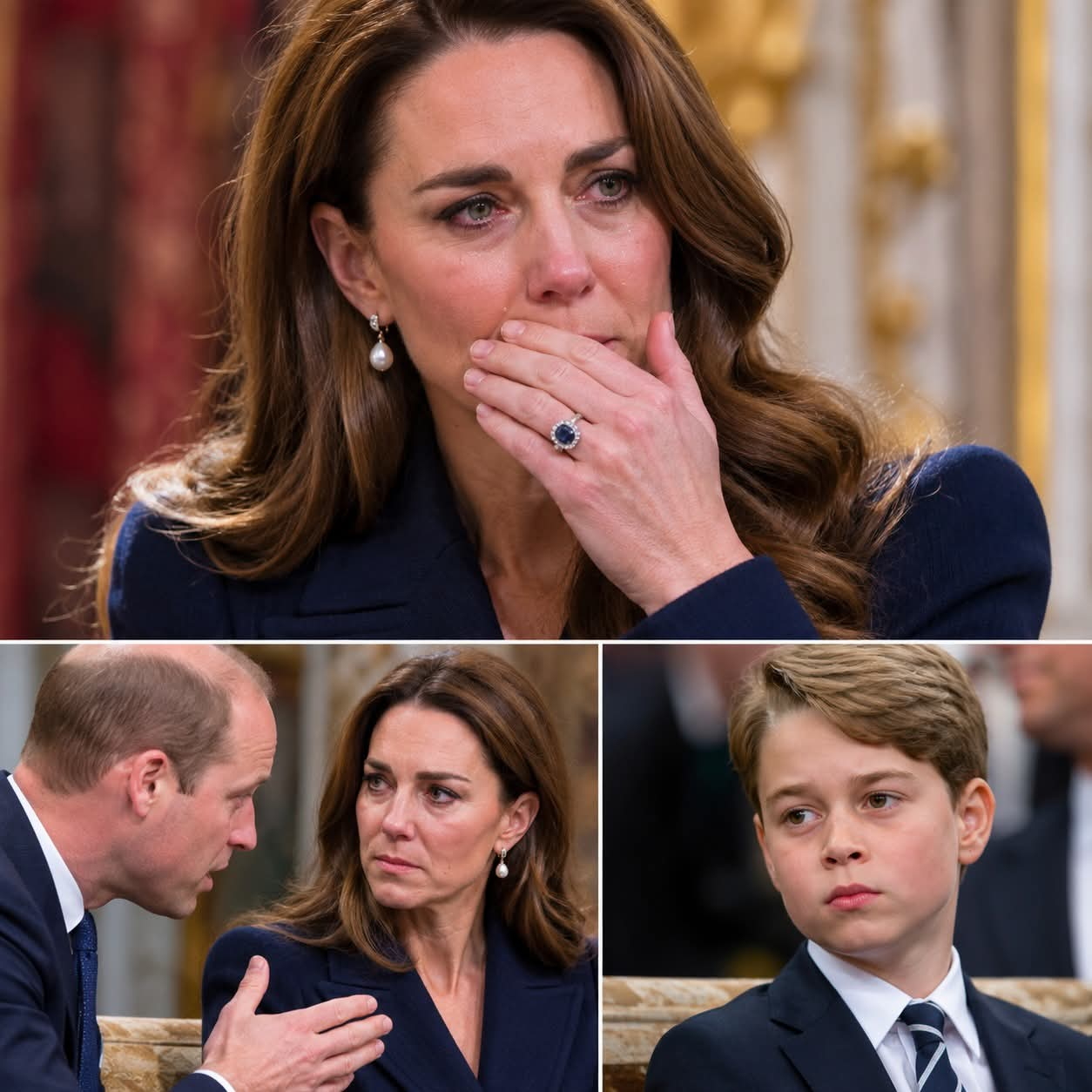
“I’D RATHER LOSE MY ROYAL TITLE THAN SIGN THIS DOCUMENT!” — PRINCESS KATE REPORTEDLY STANDS FIRM OVER A SHOCKING AGREEMENT INVOLVING PRINCE GEORGE, LEAVING PRINCE WILLIAM CAUGHT BETWEEN HIS WIFE AND THE PALACE
A dramatic royal family story has captured the imagination of royal watchers, with Princess Catherine at the centre of a fictional palace controversy involving her eldest son, Prince George, and a document that could supposedly shape his future within the monarchy.
The imagined confrontation begins with what appears to be a routine royal agreement. According to the dramatic scenario, senior palace figures believe the document is necessary to establish clear expectations surrounding Prince George’s future responsibilities as the heir to the British throne. However, when Catherine is finally presented with the complete document, she reportedly discovers a final clause that changes everything.
And her reaction is immediate.
The Princess of Wales is portrayed as refusing to put her signature on the agreement, insisting that no royal responsibility should come at the expense of her son’s happiness, freedom or personal choices.
” I would rather lose my royal title than sign a document that takes away my son’s future,” she reportedly declares in the fictional account.
THE DOCUMENT THAT CHANGES EVERYTHING
Prince George’s future has always attracted enormous public interest. As the eldest child of Prince William and Catherine, he occupies a unique position within the royal family.
From his earliest public appearances, royal observers have watched him grow from a young prince into a confident young boy increasingly familiar with the expectations surrounding his position.
Naturally, discussions about his eventual responsibilities are likely to become more significant as he grows older.
In this fictional royal drama, the palace supposedly prepares an agreement designed to establish certain expectations for George’s future. The document is presented as a way of protecting the monarchy’s traditions and ensuring continuity between generations.
At first, Catherine is said to believe that the agreement is simply about preparing her son for the responsibilities that may eventually come with his position.
But everything changes when she reaches the final section.
The controversial clause supposedly raises questions about how much control the institution could exercise over George’s future decisions, including his education, personal interests and eventual public responsibilities.
For Catherine, the issue is no longer about royal protocol.
It is about motherhood.
WILLIAM FINDS HIMSELF IN AN IMPOSSIBLE POSITION
Prince William is portrayed as being deeply concerned by his wife’s reaction.
Having spent his entire life understanding the pressures of royal duty, William knows that the monarchy operates according to traditions that often demand personal sacrifices.
He also understands that George will eventually have responsibilities that cannot simply be ignored.
However, the fictional account suggests that William initially believes the document could be negotiated rather than rejected entirely.
He reportedly attempts to explain that the agreement is intended to protect George’s future position and prevent unnecessary uncertainty.
But Catherine is unconvinced.
Her concern is that an agreement made while George is still young could place expectations on him before he has had the opportunity to understand what he truly wants.
The disagreement becomes increasingly emotional because both parents supposedly believe they are protecting their son.
William is thinking about the future king.
Catherine is thinking about her child.
And those two perspectives suddenly appear to be moving in opposite directions.
THE FINAL CLAUSE THAT SPARKS THE OUTRAGE
The most controversial part of the fictional agreement is its final clause.
Rather than simply outlining ceremonial duties and royal expectations, the imagined provision supposedly gives the institution considerable influence over major decisions concerning George’s future.
Catherine is particularly troubled by the suggestion that certain personal decisions could eventually become subject to institutional approval.
She reportedly questions why her son should have to surrender so much personal freedom simply because of the family into which he was born.
For her, preparing George for his future responsibilities should never mean treating his childhood as though it were already a royal appointment.
She wants him to receive an education, develop friendships, discover his interests and grow into an individual before being expected to carry the full weight of royal expectations.
The fictional confrontation reaches its most dramatic moment when Catherine allegedly asks William whether he would want George to grow up feeling that his life had already been decided for him.
It is a question that leaves William with little room for an easy response.
CATHERINE’S MOTHERLY POSITION
Those familiar with Catherine’s public image often associate her with family life, children’s wellbeing and the importance of providing young people with a supportive environment.
Her public work has frequently highlighted the importance of early childhood development and the experiences that shape a person’s future.
That makes the fictional storyline particularly compelling.
Rather than portraying Catherine as someone interested in challenging the monarchy for personal reasons, the story presents her as a mother determined to protect her children’s ability to develop their own identities.
She supposedly argues that George can learn about royal history without being forced to accept every expectation placed before him.
She also believes that responsibility should be introduced gradually, allowing him to understand the significance of his position as he matures.
Her position is simple: being born into the royal family should not mean losing the right to have a childhood.
WHAT HAPPENS TO THE AGREEMENT?
As the imagined disagreement continues, Catherine reportedly demands that the document be reviewed before anyone considers signing it.
She wants the controversial clause removed or rewritten so that George’s personal development and future choices are properly respected.
William, meanwhile, is left considering how to balance his wife’s concerns with the expectations associated with his own future role as king.
The fictional account suggests that he eventually begins to understand that forcing the agreement through could create a much bigger family disagreement than anyone anticipated.
Instead of immediately defending the document, he is portrayed as reconsidering whether the proposed arrangement genuinely serves George’s best interests.
That shift could change the entire conversation.
The question is no longer whether George should be prepared for royal life. It is whether that preparation can happen without unnecessarily restricting his future.
A BIGGER QUESTION ABOUT THE FUTURE MONARCHY
Beyond the dramatic disagreement, the story touches on a genuine subject of public interest: how the British monarchy will prepare its next generation.
Prince George belongs to a generation growing up in a world very different from the one his father and grandfather experienced.
Public expectations have changed. Conversations about privacy, mental wellbeing, personal freedom and the responsibilities of public figures have become increasingly important.
The monarchy itself must continually consider how to preserve its traditions while adapting to modern society.
For that reason, questions about how George will eventually approach his royal responsibilities are likely to remain a subject of discussion for many years.
However, there is currently no verified evidence that Princess Catherine has rejected a royal agreement involving Prince George, threatened to surrender her title or confronted William over such a document. The dramatic agreement and its alleged final clause are fictional elements of this storyline, not confirmed palace events.
WILL PRINCE WILLIAM STAND WITH HIS WIFE?
That is the central question driving this imagined royal drama.
William has spent decades preparing for a future in which duty will play an enormous role. But becoming a father has also given him another responsibility: ensuring that his children are supported as they grow up.
If the fictional disagreement represents anything, it is the difficult balance between preserving royal tradition and allowing the next generation to shape its own future.
Catherine’s supposed refusal to sign is therefore presented as more than a disagreement over paperwork. It becomes a symbolic declaration that her son’s wellbeing must remain at the centre of every decision concerning his future.
And perhaps the biggest question is not whether George will eventually become king.
It is what kind of king he will choose to become when that day finally arrives.

Royal Family in TURMOIL as Prince William and Princess Catherine Return From Mumbai, India, With a SHOCK Announcement That Could Change the Monarchy Forever, Leaving King Charles FURIOUS Over Their Unexpected Decision

🚨🔥ROYAL-POLITICAL SHOWDOWN! Prince Harry STUNS THE WORLD by Declaring He Would Return to Military Service If Needed While SLAMMING Donald Trump’s Approach to the Ukraine War! But Trump’s RESPONSE Was Something Absolutely Nobody Expected! Harry reportedly fired back with a powerful statement suggesting the Royal Family would stand behind him, sending shockwaves through the political world. But just when everyone thought the confrontation couldn’t get any bigger, Trump made a shocking statement that a president should never have made — a remark so explosive that it could spark calls for his resignation….

*”Mum, Wake Up”: Viral Playground Photo Shows Meghan Lying Still As Harry Holds Her And The Children Cry — Royal family just gave a statement on

🚨 ROYAL PUBLICITY BACKLASH! Harry and Meghan’s Winter Wonderland Family Photos SPARK SUSPICIONS as William and Kate Receive Worldwide Attention Following Their Successful India Tour — Critics Question Whether the Sussexes Are Trying to Steal the Spotlight and Rebuild Their Tarnished Public Image Through Archie and Lilibet. But One Detail Has Everyone Talking… 👀
🚨 PRINCE HARRY AND MEGHAN MARKLE FACE HYPOCRISY BACKLASH After Taking Archie and Lilibet to London’s Winter Wonderland Despite Years of Speaking About Their Children’s Privacy! But One Detail in the Photos Has Left Royal Fans Suspended and Asking Questions. 😳👇

Prince William and Princess Catherine Rushed for Emergency Medical Attention After Terrifying Mumbai Rickshaw Accident! King Charles Reportedly Receives Devastating News as Palace Officials Face Growing Questions About the Couple’s Condition. But What Happened to Catherine Moments After the Rickshaw Plunged Into the Water Has Left Royal Watchers Deeply Worried…

BREAKING: Prince William and Princess Catherine Rushed for Emergency Medical Attention After Terrifying Mumbai Rickshaw Accident! King Charles Reportedly Receives Devastating News as Palace Officials Face Growing Questions About the Couple’s Condition. But What Happened to Catherine Moments After the Rickshaw Plunged Into the Water Has Left Royal Watchers Deeply Worried

How Meghan Markle’s ex-husband Trevor Engelson got his ‘revenge’: Inside their rocky marriage and ugly divorce….. (For Full Information, Check Link In Comment👇🏻👇🏻)

Tom Brady, 49, Sparks Romance Rumours After Being Spotted Getting Close to a Mysterious 28-Year-Old Woman at Miami’s South Beach! But One Unexpected Detail About the Woman Has Left Everyone Talking.

Patrick Mahomes and Pregnant Brittany Mahomes Spotted Enjoying a Romantic Vacation Together Ahead of the Chiefs vs. Cardinals Game

Prince William and Kate Middleton Return from Royal Tour in Mumbai, Their Romantic and Playful Moments Steal the Spotlight During an Intimate Beach Vacation in the UK, but Kate’s Unexpected New Appearance Leaves Fans Stunned and Raises Big Questions
