
ROYAL FAMILY
🚨 KING CHARLES’ SWOLLEN HANDS SPARK HEALTH CONCERNS! What Causes “Sausage Fingers”—And When Should You Worry? A GP Reveals the Warning Signs You Should NEVER Ignore! 👀👇 Click to discover the possible causes, symptoms to watch for, and when swollen fingers could signal something serious!

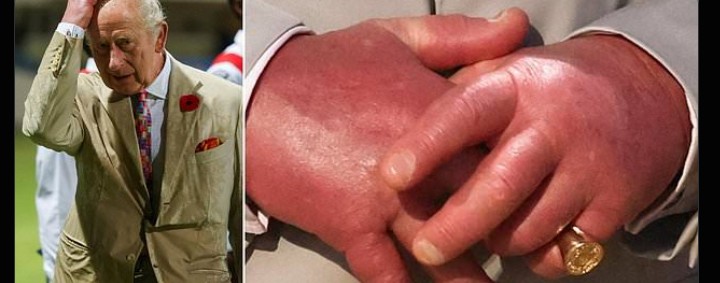
King Charles’ Swollen Hands Spark Concern: GP Reveals What Causes “Sausage Fingers” and When You Should Seek Medical Help
King Charles III’s noticeably puffy fingers have once again attracted attention, prompting renewed curiosity about a common but sometimes misunderstood health concern: swollen hands.
The King’s appearance during his Caribbean engagements has sparked conversations about his health, with observers noticing the unusual appearance of his fingers. While changes in the hands can sometimes be harmless, medical experts say persistent or unexplained swelling should never be automatically dismissed.
But what exactly causes fingers to become swollen, and when should someone be concerned?
According to general medical guidance, swollen fingers can develop for a variety of reasons, ranging from temporary fluid retention and heat exposure to inflammation, arthritis, infections, and other underlying health conditions.
Although the appearance of swollen fingers may invite speculation, a person’s health cannot be reliably assessed from photographs alone. There is no confirmed diagnosis that can be established simply by observing the King’s hands.
What Are “Sausage Fingers”?
The term “sausage fingers” is commonly used to describe fingers that appear unusually thick, swollen, or uniformly enlarged.
The swelling may affect one finger, several fingers, or both hands. In some cases, the fingers may feel stiff or uncomfortable, making everyday activities such as gripping objects, writing, or bending the fingers more difficult.
Doctors sometimes use the medical term dactylitis when an entire finger or toe becomes swollen due to inflammation. However, not every swollen finger represents this condition.
The distinction matters because the underlying cause determines whether treatment is necessary and how urgently someone should seek medical attention.
Common Causes of Swollen Hands and Fingers
1. Fluid Retention
One of the common reasons hands and fingers become puffy is fluid retention, medically known as oedema.
This can occur after consuming large amounts of salt, spending prolonged periods in hot weather, or keeping the hands in a dependent position for extended periods.
Swelling caused by temporary fluid retention may improve when the underlying trigger disappears.
However, persistent swelling can sometimes be associated with problems affecting the heart, kidneys, liver, or circulation. Such symptoms should be evaluated by a healthcare professional rather than assumed to be harmless.
2. Arthritis and Joint Inflammation
Certain types of arthritis can cause swelling, stiffness, and discomfort in the fingers.
Rheumatoid arthritis, for example, is an inflammatory condition that can affect the small joints of the hands. People may experience morning stiffness, tenderness, and swelling that affects their ability to move their fingers comfortably.
Osteoarthritis can also cause changes around the finger joints, particularly as people get older.
If swelling occurs alongside persistent joint pain or stiffness, medical evaluation can help identify the cause.
3. Heat and Changes in Temperature
Hot weather can temporarily cause the hands to swell.
When temperatures rise, blood vessels expand to help the body regulate its temperature. This may contribute to fluid accumulation in the hands and fingers.
People may notice their rings becoming tighter or their fingers appearing slightly larger during particularly hot days.
Although mild swelling associated with heat may resolve on its own, severe, persistent, or unexplained swelling should not automatically be attributed to the weather.
4. Infection
Infections affecting the fingers or hands can cause swelling, redness, warmth, and pain.
A finger that becomes increasingly swollen, particularly after an injury, bite, puncture, or cut, may require prompt medical attention.
Additional warning signs include fever, spreading redness, worsening discomfort, or difficulty moving the affected finger.
These symptoms should not be ignored because some infections can progress quickly without appropriate treatment.
5. Allergic Reactions
Allergic reactions may also cause sudden swelling of the hands and fingers.
This can happen following exposure to certain foods, medications, insect stings, or other allergens.
If swelling occurs alongside itching, hives, or facial swelling, an allergic reaction may be responsible.
Sudden swelling of the lips, tongue, or throat, or difficulty breathing, requires emergency medical assistance.
6. Other Underlying Health Conditions
In some circumstances, swollen hands may be associated with broader medical conditions.
These can include circulation problems, kidney disease, heart conditions, hormonal changes, and certain inflammatory disorders.
The presence of swelling alone does not establish that someone has any of these conditions.
A healthcare professional may need to examine the hands, review other symptoms, and consider medical history before identifying the cause.
When Should You Be Alarmed?
Medical experts generally recommend paying attention to how quickly swelling develops, whether it affects one or both hands, and whether other symptoms are present.
Some situations require more urgent attention than others.
Seek prompt medical advice if:
– Swelling develops suddenly without an obvious explanation.
– One hand or finger becomes significantly more swollen than the other.
– The affected area becomes red, hot, or painful.
– Swelling persists, worsens, or repeatedly returns.
– You experience ongoing stiffness or difficulty moving your fingers.
– Swelling occurs alongside fever or other unusual symptoms.
Emergency medical assistance is necessary if hand swelling occurs with difficulty breathing, swelling of the tongue or throat, chest pain, or other severe symptoms.
Should You Worry About King Charles’ Hands?
The appearance of King Charles’ fingers has attracted public attention, but it is important to separate observation from medical conclusions.
The King has previously spoken publicly about his cancer diagnosis, but that does not establish a connection between his cancer treatment and the appearance of his hands.
Without a confirmed medical explanation from the King or his medical team, it would be inappropriate to claim that his swollen fingers are evidence of a particular illness.
The same principle applies to anyone else experiencing similar symptoms: appearance alone cannot provide a reliable diagnosis.
The Bottom Line
Swollen hands and fingers are relatively common and may result from temporary fluid retention, heat, inflammation, or other causes.
However, persistent swelling, sudden changes, pain, redness, or accompanying symptoms can indicate a problem that deserves medical attention.
The important lesson is not to panic over every change in the hands, but to recognize when swelling is unusual and seek professional advice when necessary.
Have you ever noticed your fingers becoming unusually swollen or puffy? What do you think causes these changes, and when should people take them seriously? Share your thoughts in the comments below.

Meghan Markle’s Next Move Has Nothing to Do With Royal Duties — And People Are Talking

Prince Harry’s Unexpected New York Meetings Raise Questions About His Next Big Move

Kendall Jenner’s ultra-flat, beyond-transparent blouse in a blood-red hue that reveals her underwear emphasized that true beauty lies in what you wear it with.

Harry and Meghan’s Christmas Decision: Why a Royal Family Reunion at Sandringham Looks Unlikely

NOON ROYAL SHOCK! After 19 months of silence, Harry returned and fell to his knees before King Charles. No reporters, no cameras — only Harry’s broken sobs as he clung to his father’s feet. Charles, with boundless mercy, raised him gently. The royal family wept as Princess Anne gasped: ‘My God… Harry has… (For Full Information, Check Link In Comment👇🏻👇🏻)

KING CHARLES’ SILENT TRIUMPH: Why 16-Year-Old James of Wessex Just Obliterated the ‘Spare’ Narrative Behind Closed Doors at Windsor

Travis Kelce Opens Up About His First Holiday Season as a Married Man With Taylor Swift, and Fans Are Already Excited for the Couple! ❤️😍

😱 BABY NEWS AT 57? Jennifer Lopez Sparks Pregnancy Rumors After Being Spotted With Her Reported 62-Year-Old Boyfriend! 👀❤️

🚨 KYLIE JENNER’S SHOCKING TRANSFORMATION RUMOR ROCKS THE INTERNET! 😱🔥 At just 26, Kylie Jenner is at the center of a jaw-dropping online rumor involving her father Caitlyn Jenner’s legacy. But is there any truth to the claims, or is this another celebrity hoax taking social media by storm? 👀 The internet is buzzing—and you won’t believe what fans are saying! 👇 CLICK THE LINK IN THE COMMENTS to discover the full story and join the debate!

BREAKING: Russell Brand found guilty of one count of rape and three counts of sexual assault.

No Way Back? Inside the Royal Family’s Reported Strategy Towards Harry and Meghan
