
ROYAL FAMILY
BREAKING: King Charles Left SOBBING After Receiving Devastating News About Prince Harry in Ukraine! His Heartbreaking Reaction Has Left Royal Fans in Tears, as One Palace Insider Reveals the Painful Words King Charles Could Barely Bring Himself to Say…

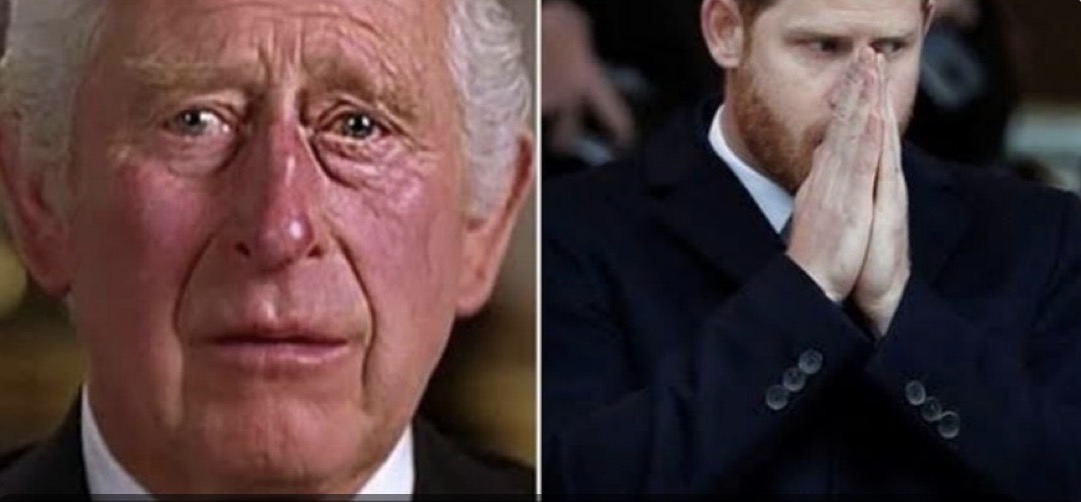
BREAKING: King Charles Left SOBBING After Receiving Devastating News About Prince Harry in Ukraine! His Heartbreaking Reaction Has Left Royal Fans in Tears
An emotional cloud has reportedly descended over the British Royal Family following a dramatic fictional account involving King Charles III and his younger son, Prince Harry. What began as an ordinary day behind the walls of Buckingham Palace quickly becomes an imagined moment of deep parental anguish, as news concerning Harry’s activities in Ukraine reaches the monarch.
In this fictional royal drama, the King is said to have been left struggling to contain his emotions after hearing unexpected news about his son. The imagined reaction has sparked conversations about the complicated relationship between a father and a son whose differences have remained one of the most discussed subjects surrounding the modern monarchy.
For Charles, the situation is not simply about royal responsibilities, public appearances or the institution he has spent his lifetime serving. It is about family, fatherhood and the emotional connection that remains between a parent and a child, even when years of disagreements have created painful distance.
A Phone Call That Changes Everything
According to the imagined palace account, the atmosphere inside Buckingham Palace changed dramatically when an urgent briefing concerning Prince Harry in Ukraine was brought to the King’s attention.
Charles was reportedly expecting a routine update when the information presented to him took an unexpected turn.
The fictional account describes the monarch listening quietly as officials explained the circumstances surrounding Harry’s situation. At first, he allegedly appeared composed, asking questions and attempting to understand every detail.
But as the conversation continued, his expression began to change.
Those around him supposedly noticed that the King had become unusually quiet. His attention was fixed on the information in front of him, and the weight of what he had heard appeared increasingly difficult to bear.
In this imagined scene, Charles eventually put down the documents and whispered words that reflected his deepest fear:
“Whatever has happened between us, he is still my son. I never stopped being his father.”
The sentence captures the emotional heart of this fictional story: a father confronting the possibility that the distance between him and his child may have become far more painful than he ever imagined.
Prince Harry’s Ukraine Connection Raises Questions
Prince Harry has previously demonstrated an interest in military affairs and veterans’ welfare. His own military service in Afghanistan remains an important part of his personal history.
His experiences in the British Army helped shape his public identity and influenced many of his later charitable activities.
However, the fictional scenario surrounding Ukraine imagines a situation in which Harry’s involvement or presence in the region becomes the subject of an unexpected palace briefing.
The imagined development raises questions about how King Charles might respond if his son found himself facing a serious personal challenge far from home.
Would the King put aside years of disagreement and reach out immediately?
Would he contact Harry privately, away from the attention of the international media?
Or would the complicated circumstances surrounding their relationship make even a simple conversation difficult?
These questions form the emotional foundation of the story.
A Father’s Pain Behind Palace Doors
For years, the relationship between King Charles and Prince Harry has attracted enormous public attention.
Harry’s decision to step back from his senior royal responsibilities in 2020 and establish a new life in the United States marked a significant turning point.
His subsequent interviews, documentary appearances and memoir brought private family disagreements into the public conversation.
For Charles, the situation has presented an uncomfortable balance between his responsibilities as monarch and his feelings as a father.
The fictional account imagines that the King has privately struggled with the emotional consequences of their separation.
Despite the disagreements, the possibility of something happening to Harry would force every other concern into the background.
In this imagined moment, the King is portrayed not as a powerful monarch surrounded by advisers and royal officials, but as an elderly father worried about his son.
That contrast is what makes the story particularly emotional.
What About Prince William?
Naturally, any imagined crisis involving Prince Harry would also raise questions about his older brother, Prince William.
The relationship between the two brothers has experienced considerable strain, with public reports over the years suggesting that reconciliation has remained difficult.
William has his own responsibilities as Prince of Wales and future King. He must balance his family life, public duties and the expectations placed upon him by the monarchy.
But the fictional story presents an interesting possibility: what if an unexpected situation involving Harry reminded William that, regardless of their disagreements, they share the same family?
Would he put aside his reservations and contact his younger brother?
Would he stand beside his father during an emotionally difficult moment?
Or would the years of unresolved tension make the situation even more complicated?
The imagined scenario leaves these questions unanswered, adding another layer of emotional uncertainty to the royal family drama.
The Words Charles Could Barely Bring Himself to Say
Perhaps the most moving part of this fictional account is the conversation imagined between Charles and one of his closest advisers.
After receiving the news, the King is portrayed as asking whether there had been any direct communication with Harry.
When told that further information was still being gathered, he allegedly became emotional.
The fictional palace scene describes him looking away before quietly saying:
“I have lost so much time with him already. I do not want the rest of our story to be written in regret.”
Those imagined words express something that many parents can understand.
Family disagreements can last for years. Pride, hurt feelings and misunderstandings can create enormous emotional distance. Yet when a loved one faces danger or uncertainty, those disagreements can suddenly seem insignificant.
For Charles, the imagined moment represents the painful realisation that there may never be a perfect opportunity to repair a broken relationship.
Could This Finally Bring Father and Son Together?
The biggest question raised by the fictional scenario is whether a serious development involving Harry could create an opportunity for reconciliation.
Royal observers have frequently speculated about the possibility of a private conversation between father and son.
A meaningful reconciliation would probably require patience, honesty and a willingness to address the disagreements that have accumulated over the years.
It would also require both men to separate their private relationship from the public expectations surrounding the monarchy.
Harry would have to feel that his concerns were being heard, while Charles would need to navigate his responsibilities without allowing every family disagreement to become a public spectacle.
There is also the question of William, whose relationship with Harry remains an important part of the wider family story.
Any lasting reconciliation would involve more than one emotional phone call.
It would require a genuine commitment to rebuilding trust.
A Reminder That Family Comes Before Titles
Ultimately, the imagined story of King Charles breaking down after receiving devastating news about Prince Harry touches on a subject that goes beyond royal titles and palace politics.
It is about the complicated relationship between parents and children.
A king may have access to advisers, official residences and an institution that has survived centuries. But none of those things can guarantee protection from the emotional struggles that affect ordinary families.
The idea of Charles desperately wanting to hear his son’s voice reminds readers that behind the royal image are human relationships that can be just as complicated as anyone else’s.
Whether father and son will eventually find a way to move beyond their differences remains an open question.
And perhaps that is the most powerful message behind this fictional royal drama: sometimes, the most important words are not the ones delivered from a palace balcony or during an official speech.
They are the quiet words spoken between a father and his son when everything else suddenly seems unimportant.
Because no matter how complicated their history becomes, the bond between a father and his child is not easily erased.

Royal Family in TURMOIL as Prince William and Princess Catherine Return From Mumbai, India, With a SHOCK Announcement That Could Change the Monarchy Forever, Leaving King Charles FURIOUS Over Their Unexpected Decision

🚨🔥ROYAL-POLITICAL SHOWDOWN! Prince Harry STUNS THE WORLD by Declaring He Would Return to Military Service If Needed While SLAMMING Donald Trump’s Approach to the Ukraine War! But Trump’s RESPONSE Was Something Absolutely Nobody Expected! Harry reportedly fired back with a powerful statement suggesting the Royal Family would stand behind him, sending shockwaves through the political world. But just when everyone thought the confrontation couldn’t get any bigger, Trump made a shocking statement that a president should never have made — a remark so explosive that it could spark calls for his resignation….

*”Mum, Wake Up”: Viral Playground Photo Shows Meghan Lying Still As Harry Holds Her And The Children Cry — Royal family just gave a statement on

🚨 ROYAL PUBLICITY BACKLASH! Harry and Meghan’s Winter Wonderland Family Photos SPARK SUSPICIONS as William and Kate Receive Worldwide Attention Following Their Successful India Tour — Critics Question Whether the Sussexes Are Trying to Steal the Spotlight and Rebuild Their Tarnished Public Image Through Archie and Lilibet. But One Detail Has Everyone Talking… 👀
🚨 PRINCE HARRY AND MEGHAN MARKLE FACE HYPOCRISY BACKLASH After Taking Archie and Lilibet to London’s Winter Wonderland Despite Years of Speaking About Their Children’s Privacy! But One Detail in the Photos Has Left Royal Fans Suspended and Asking Questions. 😳👇

Prince William and Princess Catherine Rushed for Emergency Medical Attention After Terrifying Mumbai Rickshaw Accident! King Charles Reportedly Receives Devastating News as Palace Officials Face Growing Questions About the Couple’s Condition. But What Happened to Catherine Moments After the Rickshaw Plunged Into the Water Has Left Royal Watchers Deeply Worried…

BREAKING: Prince William and Princess Catherine Rushed for Emergency Medical Attention After Terrifying Mumbai Rickshaw Accident! King Charles Reportedly Receives Devastating News as Palace Officials Face Growing Questions About the Couple’s Condition. But What Happened to Catherine Moments After the Rickshaw Plunged Into the Water Has Left Royal Watchers Deeply Worried

How Meghan Markle’s ex-husband Trevor Engelson got his ‘revenge’: Inside their rocky marriage and ugly divorce….. (For Full Information, Check Link In Comment👇🏻👇🏻)

Tom Brady, 49, Sparks Romance Rumours After Being Spotted Getting Close to a Mysterious 28-Year-Old Woman at Miami’s South Beach! But One Unexpected Detail About the Woman Has Left Everyone Talking.

Patrick Mahomes and Pregnant Brittany Mahomes Spotted Enjoying a Romantic Vacation Together Ahead of the Chiefs vs. Cardinals Game

Prince William and Kate Middleton Return from Royal Tour in Mumbai, Their Romantic and Playful Moments Steal the Spotlight During an Intimate Beach Vacation in the UK, but Kate’s Unexpected New Appearance Leaves Fans Stunned and Raises Big Questions
