
CELEBRITY
Trump screamed at Susie Wiles and banished her from the Oval Office. As the door slammed, he was still yelling: The 72 hours that destroyed the president’s beloved chief of staff… and her Camp David plot to deceive him

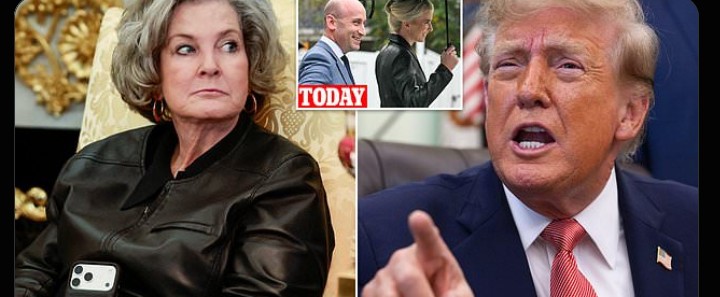
Trump’s 72-Hour White House Showdown: Susie Wiles’ Dramatic Fall, Oval Office Confrontation and the Camp David Controversy
A political earthquake is unfolding inside Donald Trump’s White House, as reports of a furious confrontation with his longtime chief of staff, Susie Wiles, raise questions about loyalty, blame and the future of the administration.
What once appeared to be one of the strongest relationships in Trump’s political world has reportedly reached a dramatic breaking point. According to reports published by the Daily Mail, Wiles faced an increasingly hostile atmosphere following the Republicans’ devastating midterm election losses, with tensions escalating during a series of extraordinary meetings.
The controversy has placed the president’s inner circle under renewed scrutiny, with competing accounts emerging about what happened behind closed doors and who ultimately bears responsibility for the administration’s political setbacks.
A confrontation that reportedly changed everything
Susie Wiles had long been considered one of the most influential figures in Trump’s political operation. Known for her organizational skills and ability to navigate the president’s unpredictable political environment, she played a major role in his return to the White House.
But following the Republicans’ disappointing midterm performance, reports suggest that the relationship between Trump and his chief of staff deteriorated rapidly.
The Daily Mail reported that Trump confronted Wiles during a meeting with senior aides, allegedly expressing his anger over the election results. Sources cited by the publication described an intense exchange, with some claiming that the president shouted at Wiles and ordered her to leave the Oval Office.
However, the accounts remain disputed. A White House official reportedly denied that Trump raised his voice at Wiles, highlighting the conflicting versions of events circulating within Washington.
Regardless of the precise details of the confrontation, the political consequences were unmistakable: Wiles’ time as chief of staff was coming to an end.
The 72 hours that reportedly sealed her fate
The days following the election defeat became a period of uncertainty for Wiles.
According to reporting, discussions about her future intensified as senior officials and political allies began assessing the administration’s next steps.
The White House was facing mounting pressure from multiple directions. Republican lawmakers were dealing with the consequences of the election, political advisers were questioning the administration’s strategy, and the president was reportedly considering changes to his leadership team.
Wiles, who had spent years building her relationship with Trump, suddenly found herself at the center of a political storm.
Some reports suggested that she wanted additional time to arrange her departure and manage a transition. Others described disagreements over whether she should remain in the administration until a later date.
The situation ultimately moved much faster than expected.
On Friday, Trump announced that Stephen Miller would replace Wiles as chief of staff, marking one of the most significant personnel changes in his administration.
The mysterious Camp David meeting
One of the most intriguing elements of the controversy concerns a reported gathering at Camp David.
According to the Daily Mail, Wiles had arranged an offsite meeting involving White House officials and aides close to her. The gathering reportedly became the subject of speculation as tensions surrounding her position intensified.
Some sources suggested that the meeting was intended to discuss her future and the administration’s internal political situation.
The circumstances surrounding the reported gathering have prompted questions about whether Wiles was attempting to organize a transition, preserve influence or maintain support among her allies.
However, claims that the meeting was part of a deliberate plot to deceive Trump remain allegations, and the available reporting does not independently establish that interpretation.
The Camp David controversy nevertheless illustrates how deeply divided the administration’s inner circle may have become during the final days of Wiles’ tenure.
Pete Hegseth becomes another source of tension
The controversy also reportedly involved Defense Secretary Pete Hegseth.
Following the election losses, some administration figures reportedly questioned whether Hegseth’s role in the administration’s military policies had contributed to Republican political difficulties.
According to sources cited in the reporting, Wiles and her allies were accused of attempting to shift attention toward Hegseth.
The allegations created another layer of tension inside the White House, where officials were reportedly debating who should take responsibility for the election outcome.
Hegseth’s supporters reportedly pushed back against attempts to make him the central figure in the political fallout.
The dispute reflects a familiar challenge in presidential administrations: when political fortunes decline, disagreements over responsibility can quickly become battles over influence and survival.
Stephen Miller’s rise changes the balance of power
Trump’s decision to appoint Stephen Miller as chief of staff represents a significant shift in the administration’s internal dynamics.
Miller has been one of Trump’s most influential advisers since the 2016 presidential campaign. Known for his hard-line immigration policies and aggressive political approach, he has long occupied a powerful position within the White House.
His appointment signals that Trump is placing renewed emphasis on loyalty, policy execution and a more confrontational governing strategy.
The change could also have consequences for the administration’s approach to immigration, executive authority and its relationship with Congress.
Miller’s supporters may view his appointment as an opportunity to strengthen the president’s agenda. Others may worry that his leadership will intensify existing divisions.
Either way, his promotion places him at the center of a rapidly changing political environment.
Wiles’ departure marks the end of an extraordinary chapter
Despite the reported tensions, Trump publicly praised Wiles and thanked her for her service.
In announcing the change, the president said she would move to his political operation, suggesting that her departure from the White House would not necessarily end their professional relationship.
Wiles also expressed gratitude for her time serving the president, describing the position as an honor.
Her departure is particularly significant because she had been widely viewed as one of the few people capable of managing Trump’s demanding political operation while maintaining his confidence.
Her supporters argue that she brought discipline and organization to an administration frequently characterized by internal conflict.
Her critics, meanwhile, believe the election losses demonstrated the need for a major change in strategy.
The conflicting assessments underline the difficult position she occupied: a powerful adviser who was simultaneously trusted by the president and criticized by members of his political circle.
What happens next?
Trump’s decision to replace Wiles raises important questions about the administration’s future.
Will Stephen Miller bring greater stability to the White House, or will his appointment deepen existing divisions?
Will Trump’s remaining advisers unite behind the new leadership, or will disagreements over policy and political strategy continue?
And perhaps most importantly, will the administration respond to the election losses by changing course or doubling down on its existing agenda?
For now, the reported Oval Office confrontation, the Camp David controversy and Wiles’ sudden departure have become symbols of a turbulent moment inside Washington.
One thing is clear: the departure of a longtime presidential confidante has dramatically reshaped the White House power structure.
The next chapter may reveal whether this shake-up was simply a change in personnel—or the beginning of a much larger transformation in Trump’s presidency.
The biggest question remains: Was Susie Wiles simply caught in the aftermath of a devastating election, or did deeper disagreements inside the White House ultimately bring her down?
The full story of what happened behind closed doors may continue to emerge as more details become available.

Royal Family in TURMOIL as Prince William and Princess Catherine Return From Mumbai, India, With a SHOCK Announcement That Could Change the Monarchy Forever, Leaving King Charles FURIOUS Over Their Unexpected Decision

🚨🔥ROYAL-POLITICAL SHOWDOWN! Prince Harry STUNS THE WORLD by Declaring He Would Return to Military Service If Needed While SLAMMING Donald Trump’s Approach to the Ukraine War! But Trump’s RESPONSE Was Something Absolutely Nobody Expected! Harry reportedly fired back with a powerful statement suggesting the Royal Family would stand behind him, sending shockwaves through the political world. But just when everyone thought the confrontation couldn’t get any bigger, Trump made a shocking statement that a president should never have made — a remark so explosive that it could spark calls for his resignation….

*”Mum, Wake Up”: Viral Playground Photo Shows Meghan Lying Still As Harry Holds Her And The Children Cry — Royal family just gave a statement on

🚨 ROYAL PUBLICITY BACKLASH! Harry and Meghan’s Winter Wonderland Family Photos SPARK SUSPICIONS as William and Kate Receive Worldwide Attention Following Their Successful India Tour — Critics Question Whether the Sussexes Are Trying to Steal the Spotlight and Rebuild Their Tarnished Public Image Through Archie and Lilibet. But One Detail Has Everyone Talking… 👀
🚨 PRINCE HARRY AND MEGHAN MARKLE FACE HYPOCRISY BACKLASH After Taking Archie and Lilibet to London’s Winter Wonderland Despite Years of Speaking About Their Children’s Privacy! But One Detail in the Photos Has Left Royal Fans Suspended and Asking Questions. 😳👇

Prince William and Princess Catherine Rushed for Emergency Medical Attention After Terrifying Mumbai Rickshaw Accident! King Charles Reportedly Receives Devastating News as Palace Officials Face Growing Questions About the Couple’s Condition. But What Happened to Catherine Moments After the Rickshaw Plunged Into the Water Has Left Royal Watchers Deeply Worried…

BREAKING: Prince William and Princess Catherine Rushed for Emergency Medical Attention After Terrifying Mumbai Rickshaw Accident! King Charles Reportedly Receives Devastating News as Palace Officials Face Growing Questions About the Couple’s Condition. But What Happened to Catherine Moments After the Rickshaw Plunged Into the Water Has Left Royal Watchers Deeply Worried

How Meghan Markle’s ex-husband Trevor Engelson got his ‘revenge’: Inside their rocky marriage and ugly divorce….. (For Full Information, Check Link In Comment👇🏻👇🏻)

Tom Brady, 49, Sparks Romance Rumours After Being Spotted Getting Close to a Mysterious 28-Year-Old Woman at Miami’s South Beach! But One Unexpected Detail About the Woman Has Left Everyone Talking.

Patrick Mahomes and Pregnant Brittany Mahomes Spotted Enjoying a Romantic Vacation Together Ahead of the Chiefs vs. Cardinals Game

Prince William and Kate Middleton Return from Royal Tour in Mumbai, Their Romantic and Playful Moments Steal the Spotlight During an Intimate Beach Vacation in the UK, but Kate’s Unexpected New Appearance Leaves Fans Stunned and Raises Big Questions
